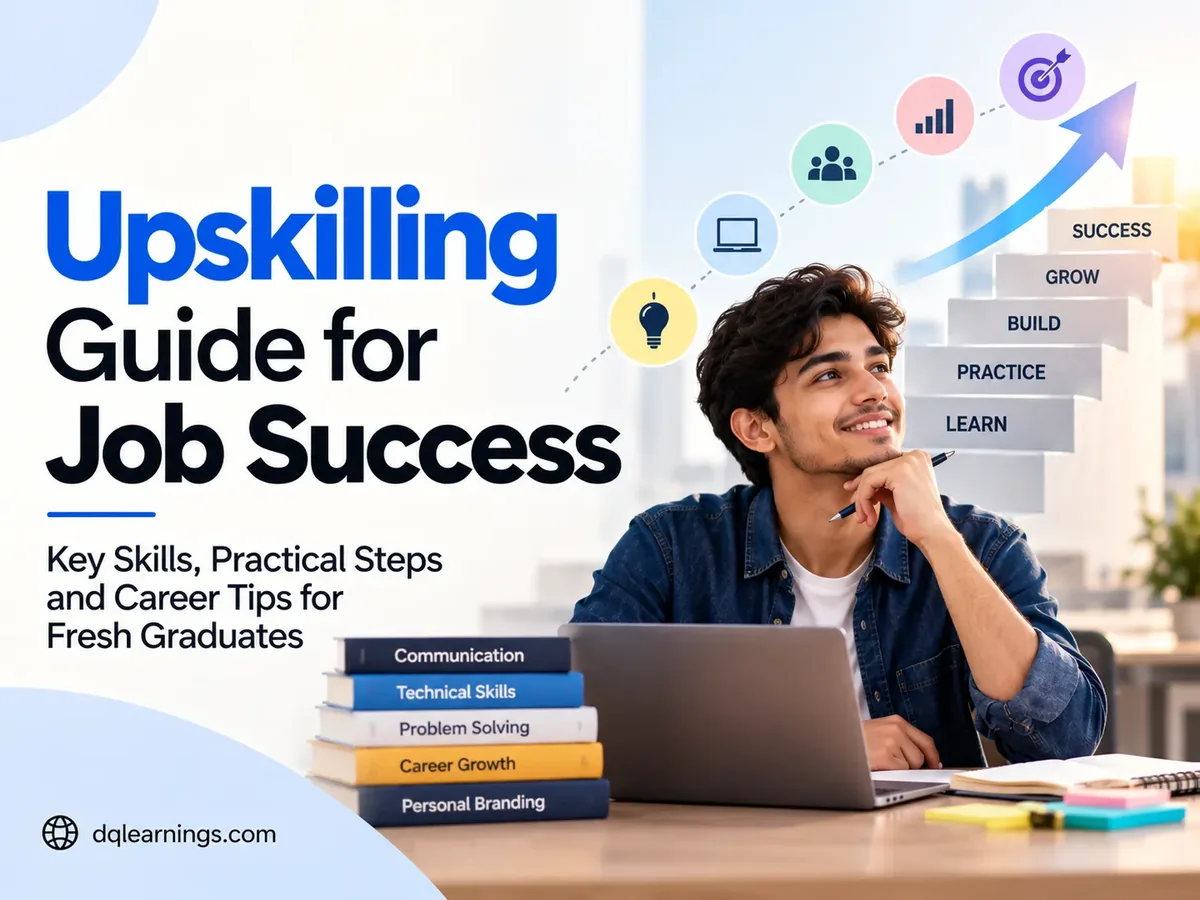
Transitioning from an academic environment into the corporate world can be exciting, but it can also feel overwhelming.
College and university education provide theoretical knowledge and subject expertise, while the corporate environment expects a broader combination of technical skills, communication, adaptability, teamwork, problem-solving, and professional maturity.
This Campus to Corporate Upskilling Guide is designed to help fresh graduates and job seekers understand the gap between classroom learning and workplace expectations and prepare themselves for professional success.
In today's competitive job market, simply holding a degree may not be enough. Employers also look for candidates who can apply their knowledge, communicate clearly, collaborate with others, adapt to new tools, and solve practical problems.
The right upskilling strategy can help you become more confident, job-ready, and better prepared for long-term career growth.
Why Upskilling Matters
The workplace is changing rapidly because of digital transformation, automation, new technologies, data-driven decision-making, and global collaboration.
Traditional job roles are evolving, while new roles and skill requirements continue to emerge.
For fresh graduates, upskilling helps bridge the gap between academic knowledge and practical workplace requirements.
Upskilling can help you:
- Improve employability by aligning your skills with job requirements
- Build confidence through practical learning
- Develop the ability to work with modern tools and technologies
- Adapt more easily to changing workplace requirements
- Perform better during interviews
- Demonstrate initiative and a willingness to learn
- Prepare for long-term career growth
Companies increasingly value candidates who demonstrate a continuous learning mindset rather than relying only on their academic qualifications.
The journey from campus to corporate therefore begins with understanding what employers expect and preparing accordingly.
Understanding Corporate Expectations
Before developing new skills, it is important to understand what organizations typically expect from entry-level professionals.
Professionalism and Accountability
Professionalism includes how you behave, communicate, manage responsibilities, and respond to commitments.
Companies generally value employees who:
- Arrive on time
- Meet deadlines
- Take responsibility for assigned tasks
- Communicate delays or problems early
- Respect colleagues and workplace policies
- Maintain professional behaviour
Accountability is particularly important because corporate teams depend on each member to complete their responsibilities.
Effective Communication
Communication is one of the most important workplace skills.
You may need to communicate through:
- Emails
- Meetings
- Presentations
- Reports
- Phone calls
- Video meetings
- Team discussions
- Client conversations
Effective communication means expressing ideas clearly while also understanding what others are trying to communicate.
It includes both speaking and listening.
Problem Solving and Critical Thinking
Employers value individuals who can analyze situations instead of waiting for instructions for every small problem.
Critical thinking involves:
- Understanding the problem
- Gathering relevant information
- Identifying possible solutions
- Comparing alternatives
- Making logical decisions
- Reviewing the outcome
Theoretical knowledge becomes more valuable when you can apply it to real workplace situations.
Teamwork and Collaboration
Most corporate work happens through teams.
You may need to collaborate with people from different:
- Departments
- Professional backgrounds
- Locations
- Experience levels
- Cultures
Strong teamwork involves sharing ideas, respecting different opinions, completing responsibilities, helping teammates, and resolving disagreements professionally.
Adaptability and Learning Mindset
Workplace requirements can change quickly.
You may need to learn:
- New software
- New processes
- New tools
- New responsibilities
- New communication methods
Employers generally value professionals who are comfortable learning, receiving feedback, and adapting to change.
A strong learning mindset can help you remain relevant throughout your career.
Core Skills to Focus On
Successful transition from campus to corporate requires a combination of technical, communication, soft, and professional development skills.
Technical Skills
Technical skills depend heavily on your chosen career field.
However, several capabilities are useful across many job roles.
Digital Literacy
Basic digital literacy may include familiarity with tools such as:
- Microsoft Word
- Microsoft Excel
- Microsoft PowerPoint
- Google Docs
- Google Sheets
- Google Slides
- Video conferencing tools
- Workplace collaboration platforms
The exact tools may differ between companies, but being comfortable with common workplace technology can make onboarding easier.
Industry-Specific Tools
Your technical learning should match your career goal.
For example:
| Career Area | Skills or Tools to Explore |
|---|---|
| Digital Marketing | Analytics, SEO, social media, advertising, CRM tools |
| Software Development | Programming, version control, testing tools |
| Finance | Excel, accounting software, financial analysis |
| Design | Design software, prototyping tools, portfolio development |
| Data Roles | Spreadsheets, data analysis, visualization tools |
| Sales | CRM systems, communication, reporting tools |
Avoid learning tools randomly.
Choose skills based on the requirements of the roles you want to pursue.
Data Interpretation
Many roles now involve some form of data.
You may need to understand:
- Reports
- Tables
- Charts
- Performance metrics
- Customer data
- Business trends
Being able to interpret data and explain what it means can improve your decision-making ability.
Communication Skills
Strong communication can significantly affect how your knowledge and ideas are perceived in the workplace.
Email and Written Communication
Professional emails should usually be:
- Clear
- Concise
- Relevant
- Respectful
- Properly structured
Learn how to write common workplace messages such as:
- Meeting requests
- Follow-ups
- Status updates
- Leave requests
- Project updates
- Client responses
Written communication also includes reports, presentations, documentation, and internal messages.
Presentation Skills
Presentations are not only about creating slides.
You should also learn how to:
- Structure information
- Explain ideas clearly
- Maintain audience attention
- Use visuals effectively
- Answer questions
- Speak confidently
Presentation skills become especially useful when working on projects, pitching ideas, or presenting results.
Active Listening
Communication is incomplete without listening.
Active listening means:
- Paying attention
- Avoiding unnecessary interruptions
- Asking relevant questions
- Confirming your understanding
- Responding appropriately
Good listening can help prevent misunderstandings and improve collaboration.
Soft Skills
Technical knowledge may help you qualify for a role, but soft skills often influence how effectively you perform within a team.
Time Management
Corporate work often involves multiple tasks and deadlines.
Useful time-management habits include:
- Planning tasks
- Setting priorities
- Breaking large projects into smaller tasks
- Tracking deadlines
- Avoiding unnecessary distractions
- Communicating when timelines may be affected
Good time management is not about staying busy all day. It is about completing important work efficiently.
Critical Thinking
Critical thinking helps you move beyond simply following instructions.
When facing a problem, ask:
- What exactly is the issue?
- What information do I need?
- What caused the problem?
- What options are available?
- What are the risks of each option?
- Which solution is most practical?
Developing this habit can make you more independent and valuable in the workplace.
Collaboration and Teamwork
Participating in group activities can help develop teamwork before entering a full-time job.
You can build collaboration skills through:
- College projects
- Internships
- Student clubs
- Volunteer projects
- Competitions
- Freelance work
The objective is to learn how to contribute effectively while working toward a shared goal.
Professional Development Skills
Professional growth also requires skills that help you find opportunities and present yourself effectively.
Networking
Networking means building genuine professional relationships.
You can connect with:
- Alumni
- Industry professionals
- Recruiters
- Mentors
- Former colleagues
- Teachers
- Professionals in your target field
Networking can happen through:
- Industry events
- Conferences
- Workshops
- Alumni communities
- Professional groups
The goal should be to build meaningful connections rather than simply collecting contacts.
Personal Branding
Your professional presence influences how recruiters and employers perceive you.
A strong personal brand may include:
- Updated resume
- Professional LinkedIn profile
- Relevant skills
- Certifications
- Projects
- Portfolio
- Professional profile photo
- Clear career positioning
Your online presence should communicate what you know, what you have worked on, and what type of opportunities you are seeking.
Interview Skills
Interview preparation should include more than memorising answers.
Practice:
- Self-introduction
- Career goals
- Strengths and weaknesses
- Project explanations
- Situational questions
- Role-specific questions
- Company research
- Questions to ask the interviewer
Mock interviews can help improve confidence and make your answers more natural.
Negotiation Skills
Fresh graduates may also benefit from understanding basic negotiation.
Before discussing salary or benefits:
- Research typical compensation for the role
- Understand your skills and experience
- Consider the complete compensation package
- Communicate professionally
- Avoid unrealistic expectations
Negotiation becomes easier with experience, but understanding the basics early can help you make better career decisions.
How to Start Upskilling
Upskilling should be treated as a structured process rather than randomly completing courses.
A practical roadmap can make your learning more focused.
Start With Self-Assessment
Begin by evaluating your current strengths and gaps.
Ask yourself:
- What skills do I already have?
- Which job roles interest me?
- What skills do those roles require?
- Which requirements am I currently missing?
- Which skills should I prioritize first?
You can create a simple skills matrix.
| Skill | Current Level | Required Level | Priority |
|---|---|---|---|
| Communication | Basic | Strong | High |
| Excel | Basic | Intermediate | High |
| Presentation | Intermediate | Strong | Medium |
| Industry Tool | Beginner | Intermediate | High |
| Interview Skills | Basic | Strong | High |
This helps turn a vague goal such as become job-ready into specific actions.
Learn From Multiple Sources
Different learning formats serve different purposes.
You can use:
Online Courses
Platforms such as online learning websites provide structured learning across many professional skills.
Use courses to build foundational knowledge, but combine them with practical application.
Workshops and Certifications
Workshops can provide focused learning on specific topics.
Certifications may also help demonstrate that you completed structured training, especially when combined with practical skills.
Industry Blogs and Webinars
Blogs, webinars, and expert discussions can help you understand:
- Industry trends
- New technologies
- Real business problems
- Career opportunities
- Practical case studies
Books and Podcasts
Books and podcasts can be useful for improving areas such as:
- Communication
- Productivity
- Leadership
- Career development
- Business understanding
Choose resources based on your learning goals rather than trying to consume everything available.
Practice and Apply What You Learn
Learning becomes valuable when you can apply it.
You can gain practical experience through:
- Internships
- Freelance projects
- Personal projects
- Case studies
- Volunteer work
- Hackathons
- Competitions
- Student clubs
For example, if you learn Excel, create a reporting dashboard.
If you learn digital marketing, work on a real or sample campaign.
If you learn design, create a portfolio project.
Practical application makes your skills easier to demonstrate during interviews.
Seek Mentorship and Feedback
A mentor can help you understand:
- Which skills matter
- Which mistakes to avoid
- How industries operate
- How to improve your work
- How to prepare for opportunities
Feedback is equally important.
Instead of taking criticism personally, use constructive feedback to identify areas that need improvement.
Reflect and Adjust Your Learning Plan
Your upskilling plan should evolve as you progress.
Review your development regularly.
Ask:
- Which skills have improved?
- Which areas still need work?
- Have my career goals changed?
- Are employers asking for new skills?
- Am I applying what I learn?
Adjust your roadmap based on these answers.
Overcoming Common Challenges
The transition from campus to corporate is rarely perfect.
Understanding common challenges can make them easier to manage.
Lack of Practical Experience
Many fresh graduates face the classic problem:
Companies want experience, but you need an opportunity to gain experience
You can reduce this gap through:
- Internships
- Personal projects
- Freelancing
- Volunteer work
- Case studies
- College projects
- Competitions
The objective is to demonstrate that you can apply your knowledge even if you have not yet worked in a full-time corporate role.
Fear of Failure
Making mistakes is part of professional growth.
Your first presentation may not be perfect.
Your first interview may not go well.
Your first project may contain mistakes.
Instead of treating failure as proof that you are not capable, use it as feedback.
Ask:
What went wrong and what can I improve next time?
Information Overload
There are thousands of courses, videos, certifications, and career recommendations online.
Trying to learn everything at once can create confusion.
Instead:
- Choose your target role
- Identify the most important skills
- Prioritize those skills
- Build one skill at a time
- Apply what you learn
- Review your progress
Focused learning is usually more effective than collecting random certifications.
Balancing Time
Upskilling should not lead to burnout.
Create a realistic schedule.
For example:
| Time | Activity |
|---|---|
| 30 minutes | Learning a new concept |
| 30 minutes | Practical application |
| 15 minutes | Reading industry content |
| 15 minutes | Career or interview preparation |
Consistency matters more than trying to study for several hours occasionally.
How to Prepare for Your First Corporate Job
Upskilling increases your employability, but your job-search strategy also matters.
Tailor Your Resume
Avoid sending exactly the same resume to every company.
Review the job description and emphasize:
- Relevant skills
- Projects
- Internships
- Certifications
- Achievements
- Practical experience
Your resume should make it easy for recruiters to understand why you are relevant to that specific position.
Optimize Your LinkedIn Profile
Your LinkedIn profile can support your job search.
Keep important areas updated:
- Professional headline
- About section
- Education
- Skills
- Certifications
- Projects
- Experience
- Profile image
You can also connect with professionals and recruiters working in your target industry.
Prepare for Interviews
Before an interview:
- Research the company
- Understand the role
- Review your resume
- Prepare examples from your projects
- Practice common questions
- Prepare role-specific questions
- Think of thoughtful questions to ask the interviewer
Do not memorize every answer word for word.
Understand the key points and communicate them naturally.
Follow Up Professionally
After an interview, you can send a short and professional follow-up message thanking the interviewer for their time.
Keep it:
- Polite
- Brief
- Professional
Avoid repeatedly messaging recruiters for updates.
What Changes After You Enter the Corporate World?
Getting your first job is not the end of the learning process.
Corporate life introduces new responsibilities and expectations.
Professionals who continue growing usually focus on:
- Taking ownership
- Meeting deadlines
- Communicating clearly
- Asking useful questions
- Learning from feedback
- Building professional relationships
- Improving technical skills
- Understanding business goals
Take Ownership of Your Work
Ownership means taking responsibility for the outcome of your tasks.
Instead of saying:
"Nobody told me what to do next"
develop the habit of asking:
"What is the next step and what information do I need to complete it?"
Ownership helps build trust.
Learn From Feedback
Performance feedback helps identify areas where you can improve.
Listen carefully and try to distinguish between:
- Technical feedback
- Communication feedback
- Behavioural feedback
- Performance feedback
Use relevant feedback to create your next development goals.
Build Strong Professional Relationships
Professional relationships can make work more productive and create learning opportunities.
Build relationships through:
- Reliability
- Respect
- Clear communication
- Collaboration
- Helping others
- Sharing knowledge
Networking should continue after you get your first job.
Keep Upskilling After You Get Hired
Technologies, business processes, and job requirements will continue changing.
Use opportunities such as:
- Internal training
- Certifications
- Workshops
- Mentorship
- Cross-functional projects
- Professional communities
Continuous learning helps you prepare not only for your current role but also for future responsibilities.
Campus to Corporate Skills Checklist
Before entering the corporate world, evaluate yourself against this checklist:
- I can communicate professionally
- I can write basic professional emails
- I can create and deliver presentations
- I understand the tools required for my target job
- I have completed practical projects
- I can explain my projects confidently
- My resume is updated
- My LinkedIn profile is professional
- I have practised interview questions
- I understand basic workplace etiquette
- I can work in a team
- I can manage deadlines
- I am comfortable receiving feedback
- I understand how to learn independently
- I have a clear career direction
You do not need to be perfect in every area before applying for jobs.
Use the checklist to identify where additional improvement is needed.
A Simple Campus to Corporate Roadmap
A structured roadmap can make your transition easier.
| Stage | Main Focus |
|---|---|
| Self-Assessment | Identify strengths, gaps, and career goals |
| Skill Building | Develop technical, communication, and professional skills |
| Practical Experience | Complete projects, internships, or freelance work |
| Personal Branding | Build resume, LinkedIn profile, and portfolio |
| Interview Preparation | Practice communication and role-specific questions |
| Job Search | Apply strategically and build professional connections |
| Corporate Development | Learn continuously and take greater responsibility |
The transition does not happen in one step.
Each stage prepares you for the next.
Conclusion
The transition from campus to corporate requires more than an academic qualification.
Graduates need to develop a combination of:
Technical Skills + Communication + Problem Solving + Teamwork + Professionalism + Continuous Learning
Upskilling helps bridge the gap between what you learn in the classroom and what organizations expect in the workplace.
Start by identifying your target career, evaluating your current skills, and creating a focused learning plan.
Build practical experience through projects, internships, competitions, or freelance work. Improve your communication, professional presence, interview skills, and ability to work with others.
Most importantly, treat upskilling as a continuous process rather than something you complete once.
Your first job is only the beginning of your professional journey.
With consistent learning, practical experience, feedback, and a clear career strategy, you can move from campus to corporate with greater confidence and build a strong foundation for long-term career growth.